
The Anger & Divisiveness Online Is Wild
We could benefit from more face-to-face, human connection and IRL experiences

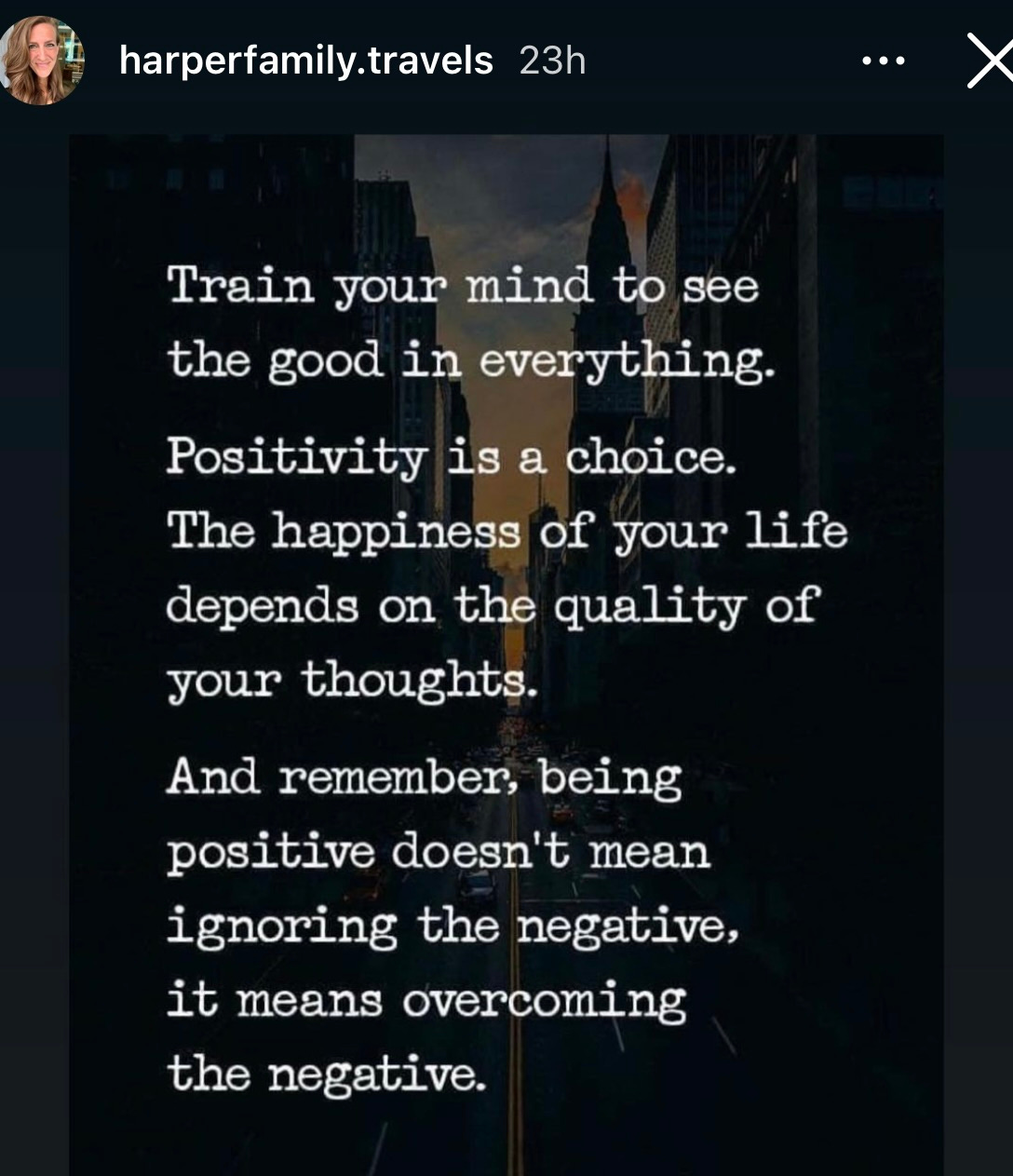
I feel a bit vulnerable posting this, but I’m pushing through my discomfort to do it anyway.
Part 1
Earlier this summer, I read and re-stacked a Substack piece that resonated for me, adding a note to it. Woooooow, angry voices poured out of the woodwork to let me know unequivocally just what they thought. There was no curiosity or inquisitiveness, no openness to dialogue (not that I was welcoming it in a hostile situation). Just pointed anger and hatred.
The message I was standing behind? Love and inclusion for all, including immigrants. And it more than ruffled feathers. I mean, I know we’re at a point as a society where “divide and conquer” is working all too well, but there’s a part of me that holds out hope we can somehow surmount the “us vs them” divide that’s being intentionally stoked. That we can somehow still sow seeds of empathy that might sprout and allow for more neutral perspective taking without such feelings of threat bubbling up and spilling over. But I’m not sure anymore.
Here are some of the comments people (or maybe bots?) posted in response to my note:
“You’re an idiot.” (Hmm, that’s a blanket statement.)
“Your views destroy societies.” (Wow, I had no idea I was so powerful!)
‘ “Amongst?”Are you British? Or do you believe that using “amongst” rather than “among” makes you sound more intelligent on paper? Would you use “amongst” among Julissa [author of the Substack piece] and her co-ethnics? Doubt it. And it doesn't work with us, either.’
(Not British, but I do have British heritage. “Among” and “amongst” are prepositions with the same meaning. Also, Julissa is a published author and well educated, so I’m confident it’s within her grasp and that of others who share her ethnic heritage. But sure, be angry about my word choice. 🤷♀️ I mean, I could’ve written my note in Spanish and I imagine that would’ve ruffled feathers, too.)
“This is why women shouldn’t vote.” (Wow, misogyny much? Also, who said anything about voting? But I take my right to vote seriously.)
“You are hopelessly naive, and your foolishness may cost us our nation.” (Again, I had no idea I was so powerful. But, please, tell me how my one comment online will impact the fate of a whole nation? Because I’d like to make my next one super powerful.)
“If or when you have children, I look forward to you opening up your home and wallet for mine.”
(Not sure why I’d need children to open up my home and wallet. But I have opened my wallet many times to help others in need, including direct mutual aid, and I’ve had former employers match my contributions to organizations to ensure it reaches as far as possible. I’ve also volunteered my time. And I pay plenty of taxes which, supposedly, help fund all sorts of services that support society. Then again, some of those services have suffered severe and devastating cuts in the last several months, so I’m not actually sure what my taxes are being used for that would ensure help for others who need it.)
“A home for everyone is a home for no one. I want states, households, and nations filled with my people. Not foreigners…People like you are basically traitors to the state and your people.”
(Ok, so first of all, let’s just call this person what they are: Racist. Second, unless this person is descended from Native Americans or enslaved ancestors brought against their will, they come from a lineage of foreigners who chose to come to the US, making them as much of a traitor as they supposedly equate me with. Interesting. I’m pretty sure I can guess who “their people” are, though it would be unwise of me to rush to judgment, so I won’t. But I will say that I want to live in inclusive places where everyone feels welcome and respected. This person clearly doesn’t want that.)
Anyway, all of this makes me sad, disgusted, and angry. I saved the following snippet ~22 months ago; it seems as relevant as ever:
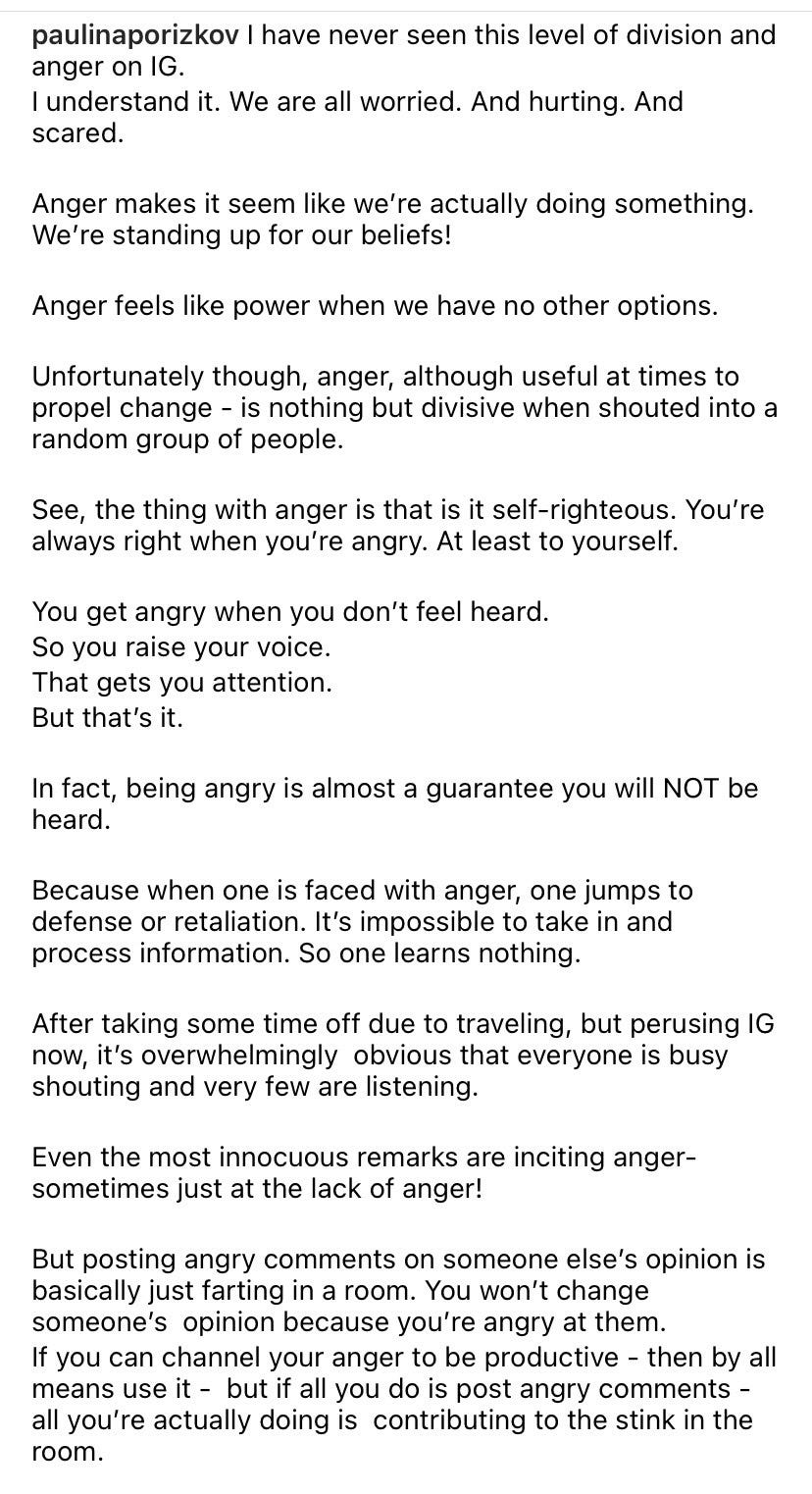
It seems a lot of people don’t know how to deal with their anger other than to direct it at others. There are plenty of things that make me angry and frustrated, too, but I’d rather focus where I can on lifting people up. It’s when we feel seen, heard, and understood that we can do and be the greatest good for ourselves and others. The world could really use more of that. But to everyone who would rather spit fire, I invite you to point your flame elsewhere. Maybe walk away from the Internet for a while (truly) and get out into nature to recalibrate. We aren’t meant to live online in divisive echo chambers.
Anyway, this gave me a visceral glimpse into the BS that too many people have to wade through on a regular basis. What a burdensome toll. 💔
Part 2
I happened to listen to the June 17 episode of The Ezra Klein Show: Sarah McBride on Why the Left Lost on Trans Rights. It’s not a podcast I typically listen to, but I found it illuminating, far beyond the issue of trans rights. Sarah’s perspective highlighted how social media distorts reality:
Ezra: “You call it a sort of abandonment of persuasion. It became true across a variety of issues for progressives, also for people on the right. And sometimes I wonder how much that reflected the movement of politics to these very unusually designed platforms of speech, where what you do really is not talk to people you disagree with.
“It's talk about people you disagree with, to people you agree with, and then see whether or not they agree with what you said. And there's a way in which I think that breeds very different habits in the people who do it.”
Sarah: “I think that that's absolutely right. I mean, again, we're not in this place because of our community or our movement, but clearly we weren't in this place because we weren't shaming people enough, because we weren't canceling people enough, because we weren't yelling at people enough...
“I think the dynamic with social media is that the most outrageous, the most extreme, the most condemnatory content is what gets amplified the most. It's what gets liked and retweeted the most. And people mistake getting likes and retweets as a sign of effectiveness. And those are two fundamentally different things.
“And I think that whether it's subconscious or even conscious, rewarding of unproductive conversations has completely undermined the capacity for us as individuals, or politically, for us to have conversations that persuade, that open people's hearts and minds, that meet them where they are. And I think the other dynamic that we have with social media is that there's sort of two kinds of people on social media.
“The vast majority of people are doom scrollers. They just go on and they scroll their social media. 20% maybe are doom posters. 10% on the far right, 10% on the far left. The people who are so strident and angry that they're compelled to post. And that content gets elevated. But what that has resulted in, for the 80% who are just doom scrollers, is this false perception of reality.
“Take a person, let's say, they’re center left. And it gives them a false perception of, everyone on the left believes this. And it pulls them that way. And then it gives them a false perception that everyone on the right believes the most extreme version of the right. And it creates this false binary extreme perception, availability bias, because all of the content we're seeing is reflective of just the 20%. And it's warped our perception of reality. It's warped our perception of who people are.”
Part 3
One of the things I noticed while “home” in the US this summer is that I spent less time online, including on social media. There are many reasons, including: I didn’t need Google Maps to help me navigate; I didn’t need Google Translate; I didn’t need my calculator for currency conversion; I didn’t need Facebook groups to find activities to join; and I didn’t need need to be active in local expat groups online. Living abroad to a degree necessitates spending a lot of time tied to technology, including on social media, in part to keep up with friends near and far. It was fascinating to notice and, while the reduced usage wasn’t intentional, the respite was much needed.
I was more present in my everyday, real life interactions, and it was wonderful. It filled my soul in deeply meaningful ways. I felt like I was a plant in a garden that had been in a drought and needed to rebuild the water table under me while also drinking up as much water as possible while I had access to it so I could flourish for some time to come.
It is possible to have meaningful interactions and friendships online (I know because I’ve been doing so for years), but they alone are not sufficient for sustaining us. We need meaningful, in person interaction and connection as our foundation. We need real life smiles and laughs and hugs. We need shared experiences. Sure, the Internet makes a lot of things possible (and convenient!), but a digital life alone is not a full life. The pandemic definitely put this into perspective.
Once upon a time, the Internet promised to be a way to connect humanity, to bring us closer together. And in some ways, it absolutely has done that. But in others, it has wielded a divisive sword, creating artificial chasms that now threaten to devour us. We are losing our humanity by spending so much time online, especially in the echo chambers that reinforce select ideas.
Humans are complex and nuanced and so are the issues and challenges we face in life. As pithy and eye-grabbing as memes and 140-word posts are, they don’t represent the layers and depth of what it means to be alive. And yet so much of the way we interact today is through these snippets that don’t fully reflect reality.
I’ve read two books in particular this year that help explain how we’ve gotten to where we are and the role that the digital world has played in it. (Neither is perfect, but both were useful in different ways.) I know there are many more books out there on similar themes, so please feel free to recommend some you’ve gleaned useful information from.
How to Stand Up to a Dictator by Maria Ressa, international investigative journalist and Nobel Peace Price winner
Careless People by Sarah Wynn-Williams, Kiwi author and former executive leader at Facebook
We are being used as bait for the economic and political agendas of the powerful, and it’s fueling much of the narrow-mindedness and divisiveness online. I know this isn’t objectively new news, but when you really pause to process it, it’s horrifying. While we can’t wholesale change the systems we’re a part of, each of us can make choices about how we show up (in real life and online) and where we prioritize our time.
Here are some questions to ponder:
Where/when are you at your best? Who are you with? What are you doing? How can you do a bit more of this?
How much of your day are you really spending online, especially on social media? What if you were to reduce it, even by 15 percent, and replace it with human connection or just time spent doing something offline that you find fulfilling and meaningful?
How much genuine human connection do you have in your life? What if you could increase it by 10 percent? What could that unlock for you?
As always, these are snippets of my thoughts. You’re welcome to share your own and even to disagree, so long as it’s respectful.